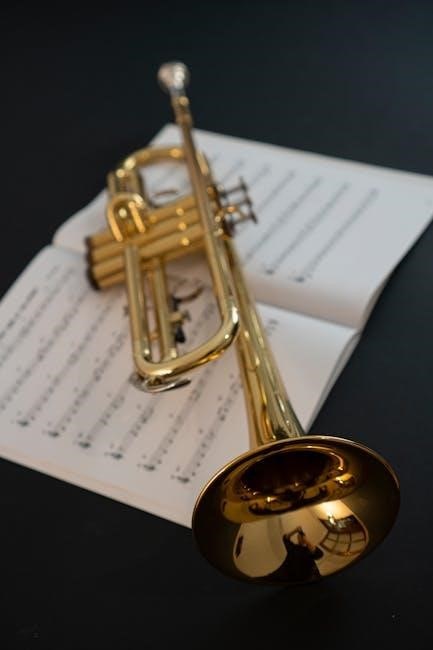
AMEB Theory of Music Grade 1: A Comprehensive Overview
Navigating the AMEB Grade 1 Theory requires diligent study; readily available PDF resources offer structured learning and practice for aspiring musicians.
What is the AMEB Theory of Music Grade 1?
The AMEB (Australian Music Examinations Board) Theory of Music Grade 1 is an introductory-level examination designed to assess a student’s foundational understanding of musical principles. It serves as a stepping stone for those pursuing formal musical education and aims to cultivate a solid base in music literacy.
This grade focuses on core concepts like reading and writing music notation, understanding rhythm and time signatures, recognizing basic intervals and scales, and interpreting common musical terms and symbols. Successful completion demonstrates a grasp of these fundamentals, enabling students to confidently approach more advanced theory studies and practical musicianship.
Many resources, including comprehensive PDF study guides, are available to aid preparation. These PDF materials typically include sample exam papers, detailed explanations of concepts, and exercises to reinforce learning. Utilizing these resources alongside dedicated practice is key to achieving a positive outcome in the AMEB Grade 1 Theory examination.
The Importance of Grade 1 Theory
Successfully completing the AMEB Grade 1 Theory of Music is incredibly valuable for any aspiring musician, regardless of their instrument. It provides a crucial framework for understanding the ‘language’ of music, enhancing both performance and comprehension. This foundational knowledge unlocks a deeper appreciation for musical structure and artistry.
The skills acquired aren’t limited to classical music; they are transferable to all genres. A strong theoretical base improves sight-reading abilities, facilitates improvisation, and aids in composing or arranging music. Furthermore, it’s often a prerequisite for progressing to higher AMEB grades and tertiary music studies.
Accessing a well-structured PDF study guide for Grade 1 can significantly streamline the learning process. These PDF resources offer a focused approach, ensuring all essential concepts are covered and providing ample opportunity for practice and self-assessment, ultimately boosting confidence and exam success.
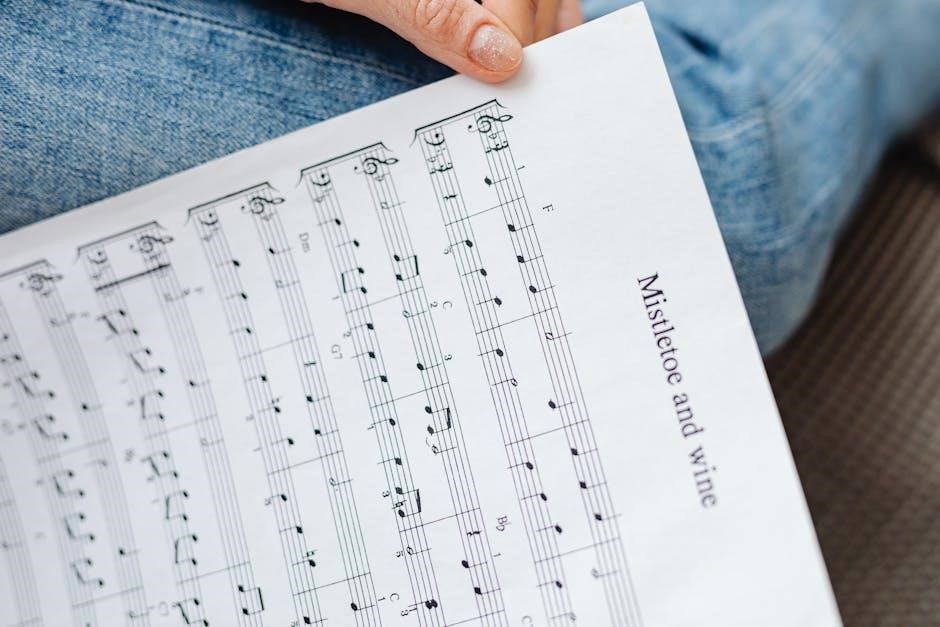
Understanding the Syllabus
Detailed AMEB Grade 1 syllabus PDF documents outline assessed topics, providing clarity on expectations and enabling focused preparation for the examination.
Key Areas of Assessment
The AMEB Grade 1 Theory of Music assessment, comprehensively detailed in the official PDF syllabus, focuses on foundational musical literacy. Expect questions covering rhythm and time signatures – identifying note values and understanding 2/4, 3/4, and 4/4 time. Pitch recognition is crucial; you’ll need to accurately name notes on the staff, including those on ledger lines, and understand the impact of sharps, flats, and naturals.
Scale knowledge, specifically C, G, D, and F major scales, and their corresponding key signatures, are heavily weighted. Furthermore, a strong grasp of basic musical terms – dynamic and tempo markings, articulation – is essential. Finally, the aural perception section, often found as a separate PDF resource for practice, tests your ability to recognize intervals and distinguish between major and minor sounds, alongside rhythmic accuracy when clapping.
Exam Format and Duration
The AMEB Grade 1 Theory of Music exam, fully outlined in the official PDF handbook, is a written paper typically lasting 1 hour and 30 minutes. It comprises a series of questions designed to assess your understanding of fundamental musical concepts. The paper is divided into sections mirroring the syllabus: rhythm, pitch, scales, musical terms, and aural perception.
Questions range from note identification and time signature analysis to scale construction and term definitions. The aural section requires responses to played examples – intervals, melodic phrases, and rhythmic patterns; Detailed sample papers are often available as supplemental PDF downloads to familiarize candidates with the question types and format. Careful time management is vital; allocate sufficient time to each section to ensure all questions are attempted. The PDF guide provides crucial information regarding permitted materials.
Required Materials
Successfully preparing for the AMEB Grade 1 Theory of Music exam necessitates specific materials, many conveniently accessible as PDF downloads. The core requirement is the official AMEB Grade 1 Theory of Music syllabus, available as a PDF from the AMEB website. This PDF details all assessed topics and provides essential guidance.
A manuscript book is needed for written answers, and a sharpened pencil is recommended. While not mandatory, supplementary resources like workbooks and practice papers – often found as PDFs – significantly aid learning. A piano or keyboard is crucial for aural perception practice, and access to audio examples (sometimes provided as PDF links to online audio) is highly beneficial. Ensure all PDF documents are readily available, either printed or digitally, for efficient study. Check the official PDF for any updates regarding permitted materials.
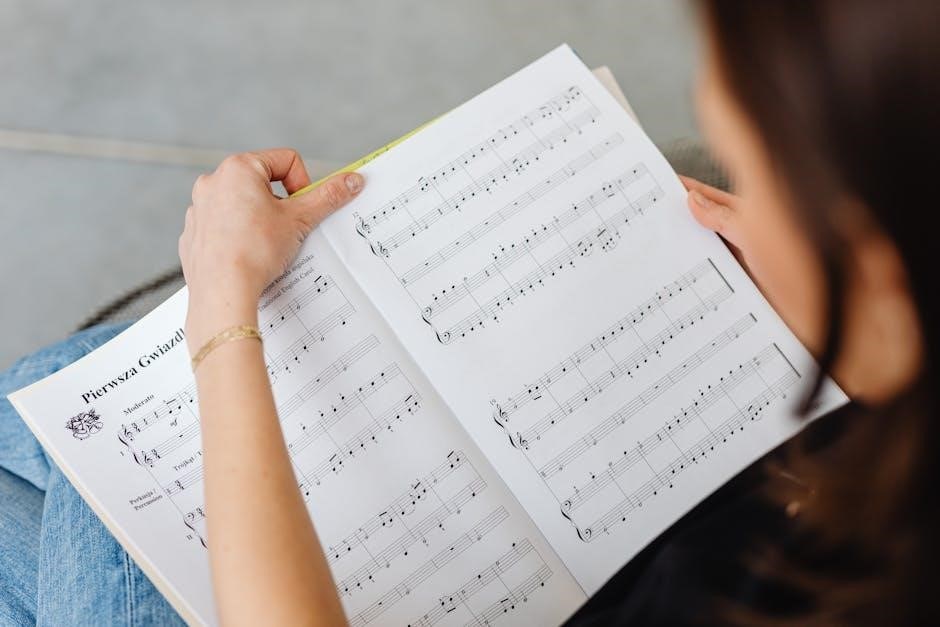
Rhythm and Time Signatures
Mastering rhythmic concepts is vital; AMEB Grade 1 PDF study guides clearly illustrate note values and time signatures for confident exam performance.
Basic Note Values (Semibreve, Minim, Crotchet)
Understanding fundamental note durations is crucial for success in the AMEB Grade 1 Theory exam. A comprehensive PDF resource will visually demonstrate the relationship between the semibreve (whole note), the minim (half note), and the crotchet (quarter note).
These notes form the building blocks of rhythm. The semibreve receives four beats, the minim receives two, and the crotchet receives one beat in 4/4 time.
Effective PDF study materials will include exercises where students practice identifying these note values in written examples and calculating their durations within a bar.
Furthermore, they’ll show how these notes combine to create rhythmic patterns. Practice recognizing these values quickly and accurately is key to confidently tackling rhythm-based questions on the exam. Don’t underestimate the importance of consistent practice with a good AMEB Grade 1 PDF guide!
Time Signatures: 2/4, 3/4, 4/4
Mastering time signatures is essential for the AMEB Grade 1 Theory exam, and a well-structured PDF study guide will clearly explain 2/4, 3/4, and 4/4. These signatures dictate the number of beats in each bar and the note value that receives one beat.
2/4 signifies two crotchet beats per bar, 3/4 indicates three crotchet beats, and 4/4 denotes four crotchet beats. A good PDF resource will provide numerous examples of musical phrases in each time signature.
Practice identifying these signatures at a glance and understanding how they affect the rhythmic feel of the music. Exercises within the PDF should involve completing bars with missing notes, ensuring the correct number of beats are present.
Consistent practice using a dedicated AMEB Grade 1 PDF will build confidence and accuracy in recognizing and applying these fundamental time signatures.
Rests and Their Values
Understanding rests – silences in music – is crucial for AMEB Grade 1 Theory, and a comprehensive PDF guide will detail their values corresponding to notes. Just as notes have durations, so do rests: semibreve rest, minim rest, and crotchet rest.
The semibreve rest receives four beats, the minim rest receives two beats, and the crotchet rest receives one beat in 4/4 time. A quality PDF resource will visually represent each rest and its equivalent note value for easy comparison.
Exercises in the PDF should focus on completing rhythmic patterns with appropriate rests, demonstrating an understanding of their duration. Recognizing rests within a musical phrase is also key.
Diligent study of a dedicated AMEB Grade 1 PDF will solidify your grasp of rests, enabling accurate rhythmic reading and performance.
AMEB Grade 1 Theory introduces the fundamental difference between simple and compound time, often clarified within a detailed PDF study guide. Simple time, like 2/4, 3/4, or 4/4, features beats that divide into two equal parts.
Conversely, compound time, such as 6/8, 9/8, or 12/8, divides each beat into three equal parts. A good PDF resource will illustrate this visually, showing how the beat is subdivided.
The PDF should include exercises identifying time signatures as simple or compound, and recognizing the grouping of beats within a measure. Understanding dotted notes and their impact on beat division is also essential.
Mastering this distinction, aided by a well-structured AMEB Grade 1 PDF, is vital for accurate rhythmic interpretation and performance, forming a solid foundation for future musical study.
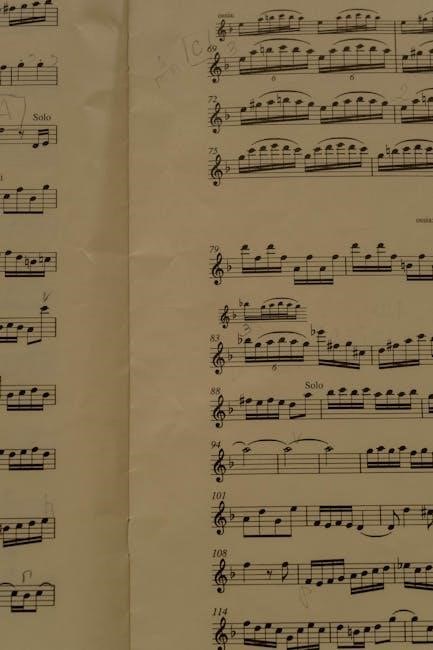
Pitch and Notation
AMEB Grade 1 PDF materials thoroughly cover staff notation, clefs, and note placement; essential for reading and writing musical pitches effectively.
The Staff, Clef, and Ledger Lines
AMEB Grade 1 PDF resources dedicate significant attention to mastering the fundamentals of musical notation, beginning with the staff – five horizontal lines and four spaces where notes are positioned. Understanding the staff is paramount. The PDF clearly illustrates the purpose of the clef, specifically the treble and bass clefs used in Grade 1, explaining how they define the pitch of the notes on the staff.
Furthermore, the materials comprehensively cover ledger lines, those short lines extending above or below the staff to represent notes outside its standard range. Exercises within the PDF focus on accurately identifying notes on the staff and on ledger lines, building a strong foundation for sight-reading. Students learn to associate each line and space with a specific note name, reinforcing this knowledge through repeated practice. The PDF’s visual aids and accompanying explanations are designed to make this core concept accessible and easily understood.
Note Names and Their Positions
AMEB Grade 1 PDF study guides emphasize memorizing note names – A, B, C, D, E, F, and G – and their precise locations on both the treble and bass clef staves. The PDF utilizes mnemonics and visual cues to aid recall, such as “Every Good Boy Does Fine” for the lines of the treble clef.
Detailed diagrams within the PDF clearly show how notes are arranged, progressing alphabetically up the staff. Students practice identifying notes in various positions, including those on ledger lines, expanding their range. Exercises focus on both recognizing note names when presented visually and accurately writing notes when given their names. The PDF reinforces this knowledge through consistent repetition and practical application, ensuring a solid grasp of this fundamental skill. Mastering note recognition is crucial for success in subsequent AMEB theory grades, and the PDF provides a strong starting point.
Accidentals: Sharps, Flats, and Naturals
AMEB Grade 1 PDF materials introduce accidentals – sharps (#), flats (♭), and naturals (♮) – as symbols altering a note’s pitch. The PDF explains that a sharp raises a note by a semitone, while a flat lowers it. Naturals cancel previous sharps or flats, restoring the original pitch.
Illustrations within the PDF demonstrate how accidentals affect note placement on the staff, emphasizing their immediate impact on the note following them within a measure. Exercises involve identifying notes with accidentals and correctly notating melodies incorporating these alterations. The PDF stresses understanding the concept of ‘raising’ and ‘lowering’ pitch, not just memorizing symbols.
Practice questions in the PDF require students to apply this knowledge in simple musical contexts, building a foundation for more complex harmonic concepts encountered in higher grades. Consistent practice with the PDF’s examples solidifies understanding of accidentals.
Interval Recognition (2nds, 3rds, 4ths, 5ths)
AMEB Grade 1 PDF resources heavily emphasize interval recognition – specifically 2nds, 3rds, 4ths, and 5ths. The PDF clearly defines an interval as the distance between two notes, explaining how to count semitones to determine its size. Visual aids within the PDF illustrate these intervals on the staff, showing their appearance above and below notes.
Exercises in the PDF focus on identifying intervals both visually (reading them on the staff) and aurally (recognizing them by ear). The PDF stresses relating interval size to its ‘sound’ – for example, a 3rd often sounds consonant, while a 2nd can sound dissonant.

Practice questions in the PDF require students to name intervals between given notes and to construct intervals starting from a specified note. Mastering these basic intervals is crucial, forming the building blocks for understanding chords and harmonies. The PDF provides ample opportunity for repetition and reinforcement.

Scales and Key Signatures
AMEB Grade 1 PDF materials introduce major scales (C, G, D, F) and their corresponding key signatures, vital for harmonic understanding and composition.
Major Scales – C, G, D, F
Focusing on C, G, D, and F major scales is fundamental for the AMEB Grade 1 Theory exam. The PDF study guides typically dedicate significant space to these, emphasizing pattern recognition and practical application. Students learn to construct each scale accurately, understanding the whole and half step relationships.
The C major scale, with no sharps or flats, serves as the foundation. G major introduces the F#; D major utilizes F# and C#; and F major employs Bb. Mastering these scales isn’t just about memorization; it’s about internalizing the sonic character of each key.
AMEB resources often include exercises requiring students to write out scales, identify scale degrees, and transpose simple melodies. Understanding these scales is crucial for subsequent topics like key signatures and chord construction, making thorough practice with the PDF materials essential for success.
Key Signatures Corresponding to Major Scales
Understanding the relationship between major scales and their corresponding key signatures is vital for the AMEB Grade 1 Theory. PDF study materials clearly illustrate this connection, showing how sharps or flats are added to the staff to indicate the key.
C major has no sharps or flats, while G major features one sharp (F#). D major requires two sharps (F# and C#), and F major utilizes one flat (Bb). Students must learn to quickly recognize these key signatures and associate them with their respective scales.
AMEB resources often present exercises where students identify the key signature and then write out the corresponding major scale. The PDF guides emphasize a logical approach – understanding why a particular sharp or flat is present, not just memorizing the pattern. This foundational knowledge is crucial for analyzing and understanding musical scores.
Scale Construction Basics
Mastering scale construction is fundamental in AMEB Grade 1 Theory, and comprehensive PDF guides break down the process into manageable steps. Students learn the whole-tone and half-tone pattern – whole, whole, half, whole, whole, whole, half – that defines a major scale.
Applying this pattern to the tonic (root) of a scale allows for accurate note selection. PDF resources often include diagrams illustrating the placement of tones and semitones on the keyboard and staff. Understanding this pattern is key to building scales from memory, without relying solely on memorized fingerings.
AMEB preparation materials emphasize writing scales correctly, including the appropriate key signature and accidentals. The PDFs provide ample practice exercises, reinforcing the concept and building confidence. This skill is essential for harmonic understanding and improvisation later on.

Musical Terms and Symbols
Decoding musical language is vital; AMEB Grade 1 PDFs clearly explain dynamics, tempo, and articulation, building a strong musical vocabulary.
Dynamic Markings (p, mp, mf, f)
Understanding dynamic markings is fundamental to expressive musical performance. The AMEB Grade 1 Theory syllabus introduces four core dynamic levels: piano (p), meaning soft; mezzo piano (mp), meaning moderately soft; mezzo forte (mf), meaning moderately loud; and forte (f), meaning loud.
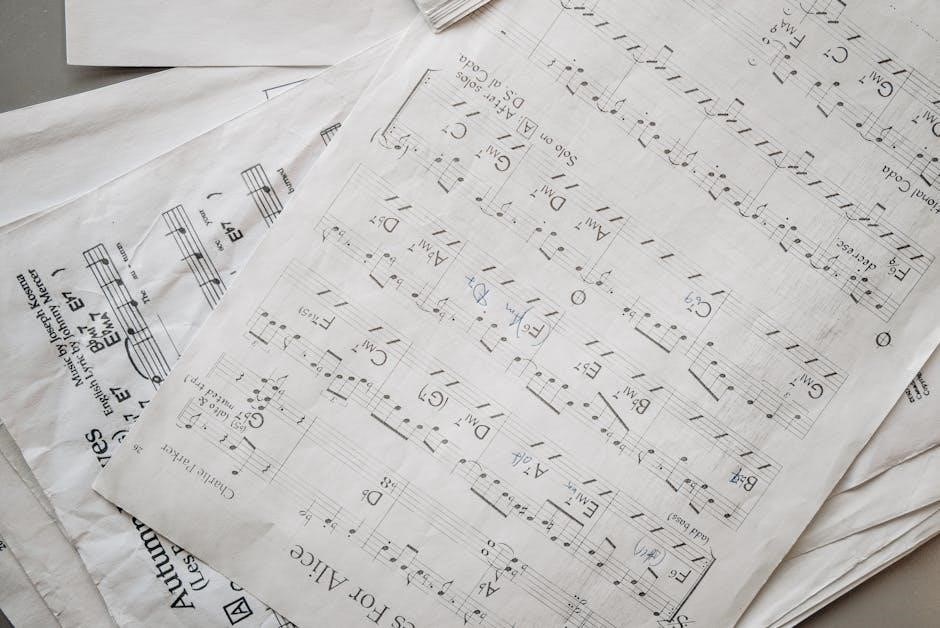
PDF study materials often present these markings within musical examples, allowing students to visually associate the symbol with the intended volume. It’s crucial to not only recognize the symbols but also to aurally understand the difference in volume each represents. Practice identifying these dynamics in simple melodies.
Furthermore, the AMEB expects students to understand how dynamic markings influence the overall character and emotional impact of a piece. Resources, including downloadable PDF practice papers, will test your ability to correctly interpret and apply these essential musical instructions. Mastering these basics sets a strong foundation for future musical studies.
Tempo Markings (Allegro, Moderato, Andante)
Tempo markings indicate the speed at which a piece of music should be performed. The AMEB Grade 1 Theory focuses on three common Italian terms: Allegro, meaning fast and lively; Moderato, meaning moderate or at a medium pace; and Andante, meaning at a walking pace.
PDF resources frequently include musical excerpts annotated with these tempo indications, helping students connect the term to its corresponding speed. It’s vital to develop an internal sense of these tempos, rather than relying solely on a metronome. Practice clapping or tapping rhythms at each tempo to internalize the feel.
The AMEB exam may ask you to identify the tempo based on a musical phrase or to select the appropriate tempo marking for a given mood. Downloadable PDF practice tests are invaluable for honing this skill. Understanding tempo is crucial for accurate and expressive musical interpretation.
Articulation Marks (Staccato, Legato)
Articulation marks dictate how a note is played, influencing its character and expression. The AMEB Grade 1 Theory introduces two fundamental articulation marks: Staccato, indicated by a dot above or below the note, meaning short and detached; and Legato, indicated by a slur connecting notes, meaning smooth and connected.
PDF study materials often visually demonstrate these markings within musical examples. Recognizing the difference between staccato and legato is essential for accurate performance and interpretation. Students should practice playing scales and simple melodies incorporating both articulations.
The AMEB exam may present questions asking you to identify articulation marks or to describe the effect they create. Utilizing PDF practice papers with varied examples will solidify your understanding. Mastering articulation adds nuance and musicality to your playing.
Aural Perception Skills
Developing your ear is crucial; AMEB Grade 1 PDF resources provide audio exercises to hone interval, rhythm, and melodic recognition abilities effectively.
Recognizing Intervals by Ear
Mastering interval recognition is a cornerstone of AMEB Grade 1 aural skills. Many PDF study guides include dedicated sections with exercises designed to train your ear to quickly and accurately identify intervals – 2nds, 3rds, 4ths, 5ths, and even larger leaps. These resources often feature ascending and descending examples, presented both melodically and harmonically.
Effective practice involves repeatedly listening to interval examples and comparing them to a known reference pitch, like the tonic. Utilizing PDF workbooks with answer keys allows for self-assessment and targeted improvement. Don’t just memorize; focus on the sound of each interval – its unique quality. Consider associating intervals with familiar melodies; for example, a major third often appears in “Oh When the Saints.” Consistent practice with these PDF materials will build confidence and accuracy in identifying intervals during the exam.
Identifying Major and Minor Sounds
Distinguishing between major and minor tonalities is crucial for the AMEB Grade 1 aural component. Numerous PDF resources offer exercises specifically designed to develop this skill, often presenting short melodic phrases or chord progressions. The key is to focus on the overall ‘feeling’ – major typically sounds bright and happy, while minor often evokes a sense of sadness or seriousness.
Many PDF study guides provide comparative examples, playing a phrase in both major and minor to highlight the difference. Practice listening for the characteristic third of the scale; a major third creates a major sound, while a minor third creates a minor sound. Don’t rely solely on memorization; actively listen and internalize the emotional quality of each tonality. Utilizing PDF practice tests with answer keys will help solidify your understanding and build confidence for the exam, ensuring you can confidently identify major and minor sounds.
Clapping Rhythms Accurately
Mastering rhythmic accuracy is vital for the AMEB Grade 1 aural tests. Thankfully, many PDF study materials include dedicated rhythm exercises, progressing from simple to more complex patterns. These often involve clapping back rhythms dictated by an audio recording. A helpful technique is to subdivide the beat – for example, counting “1 and 2 and” for quavers – to maintain a steady pulse.
PDF resources frequently present rhythms using standard notation, allowing you to visually analyze the pattern before attempting to clap it. Start slowly and gradually increase the tempo as your accuracy improves. Pay close attention to rests, as these are often a point of difficulty. Consistent practice with PDF exercises, coupled with a metronome, will significantly enhance your ability to clap rhythms accurately and confidently during the exam, ensuring a strong performance in this crucial section.